
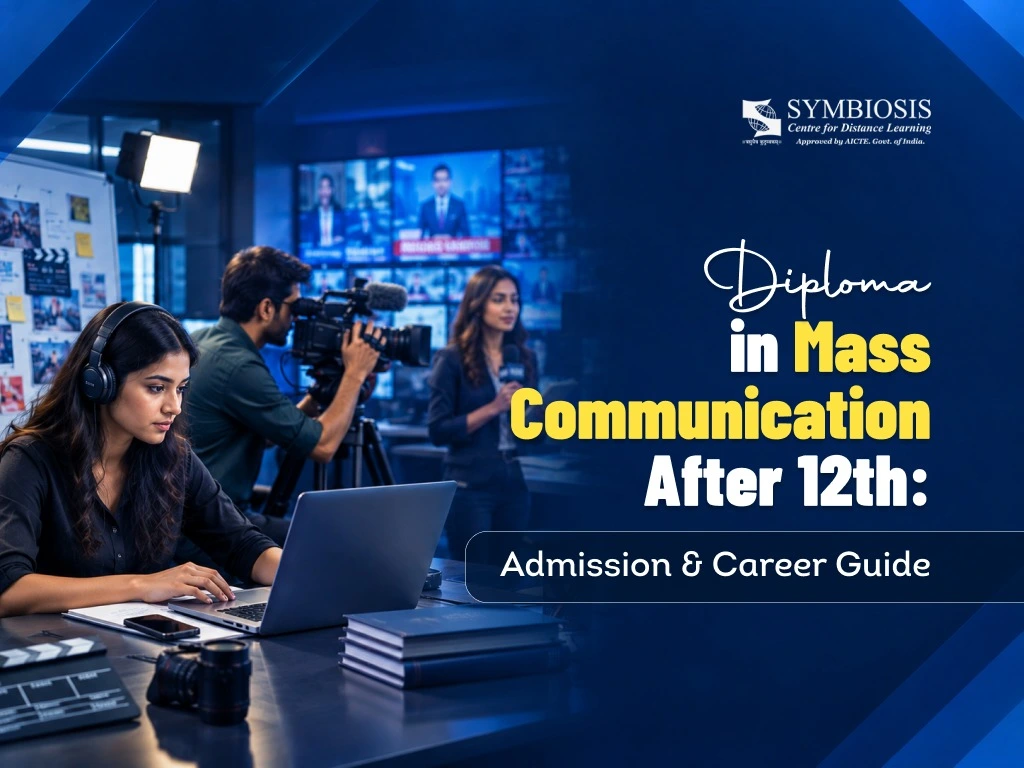

From news reports and social media posts to advertisements and digital videos, mass communication shapes how people receive information, understand events, and connect with the world. For students interested in writing, journalism, media production, or public relations, pursuing a diploma in mass communication can be a way to explore these fields and develop relevant skills.
After Class 12, students can choose from different media-related courses depending on their interests and career plans. Understanding the eligibility criteria, syllabus, duration, fees, and practical exposure can help you choose a programme that fits your goals.
This guide explains what to look for in a diploma in mass communication, the career paths you can explore, and the admission requirements to keep in mind. It also covers SCDL’s Post Graduate Diploma in Journalism and Mass Communication for graduates who want to pursue further studies in the field.
What Is a Diploma in Mass Communication?
A diploma in mass communication is a course that introduces students to how information, news, and ideas are created and shared through different media channels. These include newspapers, television, radio, websites, social media, and other digital platforms.
Depending on the course structure, students may learn about:
- Journalism and reporting: Gathering information, researching stories, and presenting news.
- Media writing: Creating articles, scripts, news reports, and other forms of written content.
- Advertising and public relations: Understanding how brands communicate with audiences and manage their public image.
- Photography and video production: Learning the basics of visual storytelling and media production.
- Digital media: Exploring how websites, social media, and online platforms are used to share content.
Unlike a broad undergraduate degree, a diploma may focus on specific job-related skills or provide an introduction to several areas of mass communication. For students interested in the media industry, a diploma in mass communication can be a way to explore different career paths before committing to a longer qualification.
Can You Pursue a Diploma in Mass Communication After 12th?
Yes, you can pursue a Diploma in Mass Communication after Class 12 if the institution’s eligibility criteria allow admission after 10+2. However, it is important to check the qualification before applying. A diploma in mass communication available after Class 12 is different from a postgraduate diploma, which generally requires graduation.
At SCDL, the Post Graduate Diploma in Journalism and Mass Communication is designed for graduates who want to develop their understanding of journalism, media, and communication. Students who have completed Class 12 would need to pursue an eligible undergraduate qualification before applying for this programme.
Mass Communication Course Options After Class 12
After Class 12, students can choose from diploma programmes, undergraduate degrees and short-term certificate courses related to mass communication.
The right option depends on whether you want to study media broadly, focus on journalism or develop a specific skill such as content writing, photography or video editing.
Here are the main options to consider:
- Diploma in Mass Communication: Introduces students to areas such as media writing, journalism, advertising and public relations. The duration and subjects depend on the institution.
- Diploma in Journalism: Focuses more closely on news reporting, writing, editing and journalistic practices.
- BA or BA (Hons.) in Journalism and Mass Communication: Offers broader study of media, communication, journalism and related fields through an undergraduate degree.
- BA in Mass Communication or Media Studies: Helps students understand different forms of media, audience communication and content production.
- Certificate courses: Provide focused learning in areas such as digital media, photography, video editing, advertising or social media communication.
Eligibility for a Diploma in Mass Communication
Eligibility for a Diploma in Mass Communication varies by institution. Many programmes accept students who have completed Class 12 from a recognised board, while postgraduate diplomas require graduation.
At SCDL, the Post Graduate Diploma in Journalism and Mass Communication has the following eligibility criteria:
- Educational qualification: A bachelor’s degree in any discipline from a recognised university.
- International and SAARC applicants: Graduation from a recognised or accredited university or institution.
- Final-year students: Students awaiting their bachelor’s degree results can apply, provided they complete graduation within the period specified by SCDL.
Note: Students who have completed only Class 12 are not eligible for direct admission to SCDL’s PGDJMC programme.
Admission Process for Mass Communication Course
The admission process for diploma in mass communication depends on the institution and qualifications. Students applying for a diploma after Class 12 should first confirm the eligibility criteria, while applicants for postgraduate programmes must meet the prescribed graduation requirements.
For admission to SCDL’s PGDJMC, applicants can follow these steps:
Step 1: Register online
Sign up as a new user on the SCDL Apply Online portal.
Step 2: Complete the application form
Pay the applicable application fee and fill in the required personal and academic details.
Step 3: Upload the required documents
Submit a recent passport-size photograph, government-issued photo ID, signature and academic records, including graduation documents as applicable.
Step 4: Complete the admission formalities
Ensure the application and supporting documents meet SCDL’s eligibility and documentation requirements.
Step 5: Pay the programme fee
Follow SCDL’s instructions for fee payment through the available payment options and within the prescribed timeline.
Note: Applicants should refer to the official SCDL page for updated requirements, fees, and deadlines.
Fees and Duration of Mass Communication Courses
The duration and fees of a diploma in mass communication vary depending on the qualification and institution. A diploma course after Class 12 may take one or two years, while a bachelor’s degree generally requires a longer period of study.
At SCDL, the Post Graduate Diploma in Journalism and Mass Communication has the following details:
| Particulars | SCDL PGDJMC Details |
| Course duration | 1 year |
| Registration validity | 2 academic years |
| Total programme fee | INR 57,000 (General category) |
| Application fee | INR 1,200, non-refundable |
| Instalment option | INR 34,000 + INR 23,000 (General category) |
Note: Check the official SCDL programme page for the latest fee structure and applicable admission terms.
The programme fee does not include examination and project fees, which are payable separately. Printed self-learning material is available as an optional paid service.
What Will You Learn in a Mass Communication Course?
A mass communication course introduces students to how news, information and creative content are produced and shared across different media platforms. The subjects vary by programme, but a diploma in mass communication may cover journalism, media writing, advertising, public relations, and digital media.
At SCDL, the PG Diploma in Journalism and Mass Communication syllabus is divided across two semesters.
| Semester | Subjects | Key areas covered |
| Semester I
|
Introduction to Journalism and Mass Communication | Media theories, media and culture, and the role of media in society |
| Basics of Journalistic Writing
|
News writing, reporting, headlines, interviewing and editing | |
| Media and Contemporary Issues | Media coverage of gender, human rights, public health and other social issues | |
| Development Communication
|
Communication for social change, rural development and development journalism | |
| Integrated Marketing and Corporate Communication | Corporate communication, organisational identity and marketing communication | |
| Semester II
|
Print Media and Television Journalism | Reporting, writing, editing and television presentation |
| Online Journalism
|
Writing for the web, mobile journalism, digital storytelling, SEO and social media | |
| Media Laws and Ethics | Media regulations, privacy, defamation, digital journalism ethics and intellectual property | |
| Business of Media
|
Media industries, advertising economics, media planning and the business of print, broadcast and online media | |
| Project | Applying learning through a project component |
The programme combines journalism, communication, and media-related subjects to help learners build a foundation in the field. Students should refer to the official SCDL programme page for the current curriculum.
Career Options After a Diploma in Mass Communication
A Diploma in Mass Communication can help you explore entry-level opportunities in journalism, digital content, public relations, advertising, and media production. The roles you can pursue depend on your course curriculum, skills, practical experience, and the requirements of individual employers.
Here are some career opportunities to consider after studying mass communication:
| Job role | What the role involves | Indicative salary range in India |
| Content Writer | Writing articles, blogs, website content and other digital material | INR 2.5–4 lakh |
| Reporter or Junior Journalist | Researching stories, interviewing sources and preparing news reports | INR 2.5–4.5 lakh |
| Social Media Executive | Planning posts, publishing content and tracking audience engagement | INR 3–4.5 lakh |
| Public Relations Executive | Preparing press releases, coordinating media communication and supporting brand reputation | INR 2.8–4.5 lakh |
| Advertising Copywriter | Writing promotional content for advertisements, campaigns and brands | INR 3–4.8 lakh |
| Video Editor | Editing video footage and preparing content for digital or broadcast platforms | INR 2.7–4.5 lakh |
Note: Salary figures are indicative estimates for early-career roles, based on published career guides. Actual salaries vary by employer, location, experience, portfolio and skills. These are not SCDL placement figures.
A diploma in mass communication may help you build a foundation for these roles, but it does not automatically qualify you for every position. Students interested in media careers can start building a portfolio during their studies. Sample articles, reports, campaigns, and short videos can demonstrate practical ability to employers.
Skills to Build a Career in Mass Communication
A qualification gives you a foundation, but communication work also depends on how well you apply what you learn.
The following skills can help you prepare for different media roles:
- Writing and communication: Express information clearly, organise ideas, and adapt your language to different audiences.
- Research and fact-checking: Check sources, verify details, and distinguish reliable information from unverified claims.
- Creativity: Develop engaging stories, campaign ideas and content formats.
- Digital skills: Become familiar with relevant content management systems, editing software, and social media tools.
- Visual storytelling: Understand how photographs, graphics, and videos can communicate information.
- Critical thinking: Assess information, identify important details, and consider different perspectives.
- Time management: Work towards deadlines while maintaining accuracy and quality.
You can start building these skills while studying. Writing for a college publication, creating a sample news report, producing a short video or developing a small portfolio can give you opportunities to practise.
What to Look for in a Mass Communication Course?
The course with the most familiar name is not necessarily the best fit for your plans. Compare the following factors before making a decision.
- Career direction: If you want to work in journalism, look for reporting, news writing, and media ethics. If digital content interests you, check for relevant writing, social media, and production subjects.
- Qualification level: Decide whether you want a short diploma or a broader undergraduate degree.
- Practical exposure: Check for projects, field assignments, studio access, internships, and portfolio-building opportunities.
- Course format: Consider whether classroom-based, online or distance learning suits your schedule and learning preferences.
- Total cost: Compare the complete fee structure rather than relying only on the advertised tuition fee.
- Institutional credibility: Review the institution’s official information and verify applicable recognition or approval requirements.
If you are still exploring media careers, a broad course may help you understand different areas before choosing a specialisation. If you already have a clear goal, a more focused programme may be worth considering.
Why Consider SCDL for Journalism and Mass Communication?
For students planning to build a career in journalism, media or communication after graduation, SCDL’s PG Diploma in Journalism and Mass Communication offers an opportunity to study different areas of the media industry through distance learning.
Here are a few features of diploma in mass communication:
- Broad curriculum: Covers journalistic writing, print and television journalism, online journalism, media laws and ethics, and corporate communication.
- One-year programme: The course duration is one year, with a registration validity of two academic years.
- Flexible learning: The distance learning format allows students to plan their studies around other commitments.
- Project component: The second semester includes a project that allows learners to apply their understanding of journalism and mass communication.
- Multiple career areas: The diploma in mass communication covers areas relevant to roles such as journalist, reporter, content developer, public relations professional and copywriter.
The programme is intended for graduates, so students who have completed only Class 12 cannot apply directly. Those interested in SCDL can review the official PGDJMC programme page for current admission details.
Conclusion
A diploma in mass communication can be a starting point for students who want to understand how the media industry works and explore career growth in journalism, advertising, public relations or digital content. The right course depends on your interests, educational background, and the kind of work you see yourself doing.
If you have completed Class 12, check the eligibility of each programme before applying, as some courses are open to school-leavers while others require graduation. For graduates who want to specialise further in journalism and media, SCDL’s Post Graduate Diploma in Journalism and Mass Communication offers another study option. Comparing the course structure and fees can help you choose an option that fits your plans.
FAQs
1. Can I pursue a Diploma in Mass Communication after 12th?
Yes, you can pursue a Diploma in Mass Communication after Class 12 if the institution accepts students who have completed 10+2. Eligibility, minimum marks and course duration vary by programme, so check the admission requirements before applying.
2. What is the difference between a diploma and a degree in mass communication?
A diploma generally offers focused learning in selected areas of media and communication, while a bachelor’s degree provides a broader undergraduate education over a longer period. The curriculum, practical exposure, and opportunities for further study depend on the qualification and institution.
3. How long does a Diploma in Mass Communication take?
The duration depends on the institution and programme. Some diplomas take one year, while others may take two years. Students must check the prescribed duration and maximum completion period before enrolling.
4. What career options are available after a Diploma in Mass Communication?
Depending on your skills, course content and employer requirements, you may explore roles in content writing, journalism, social media, public relations, advertising and video production. Practical experience and a portfolio can help demonstrate your abilities to potential employers.
5. Can I apply for SCDL’s Journalism and Mass Communication programme after Class 12?
No, SCDL offers a PG Diploma in Journalism and Mass Communication, which requires a bachelor’s degree in any discipline from a recognised university. Students who have completed Class 12 should first pursue an eligible undergraduate qualification before applying.


 Symbiosis Online